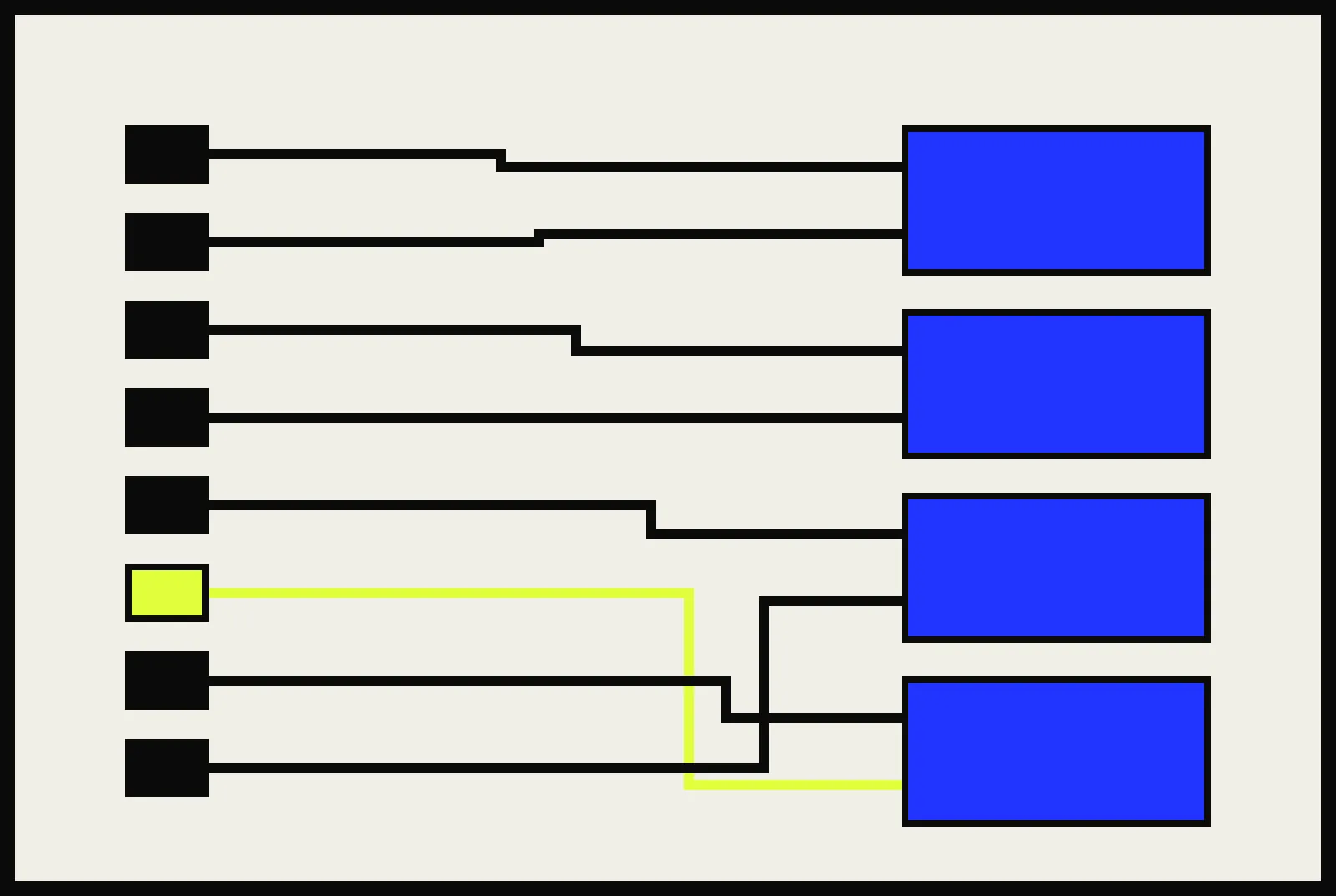
A chain is only as honest as its worst step
Classic automation fails loudly. A script that cannot parse a file throws an error and stops. You find out immediately.
A chain with a language model in it fails politely. Given a malformed input it does not stop: it produces something plausible and passes it on. The step after that accepts it, because it looks like what it expected. By the time anyone notices, the wrong output has been filed, sent or acted on.
That difference is the whole design problem. You are not building a chain that works, which is easy. You are building one whose failures are visible.
Three rules that hold up
Constrain the output shape, then validate it. Ask for a fixed structure and check it before the next step runs. A step that returns free prose into a machine-read field is a step that will eventually return prose you did not want.
Give every step a way to refuse. A step that must always produce an answer will invent one. A step allowed to return nothing, and route to a person instead, is the difference between a queue of three exceptions and a month of silent corruption.
Log the input alongside the output. When a bad result surfaces weeks later, the only way to understand it is to see what went in. Storing only the output makes the failure unexplainable, which means it repeats.
The part people skip
Decide what happens when the chain is wrong and nobody noticed for a week. If that answer is uncomfortable, the chain needs a person in it, not a better prompt.